

How Montessori Helps Children Build Independence: Everyday Examples
Montessori helps children practice independence by making everyday activities accessible, showing them how to begin, and giving them time to try. Choosing an activity, pouring water, or putting belongings away can become an opportunity to participate more fully in daily life, with an adult nearby to offer support.
For families with young children, independence often starts with something small: one sleeve pulled on, one cup carried to the table, or one request for help with a difficult step.
The aim is growing participation. Children do not need to complete every task alone for an experience to be worthwhile.
What Does Independence Mean in Montessori?
In Montessori, independence develops through opportunities to act, make choices, and care for oneself and the surroundings. Adults prepare the space and demonstrate activities in manageable steps. The Association Montessori Internationale’s glossary of Montessori terms describes how careful demonstrations and Practical Life experiences support this approach.
Imagine a child learning to carry a tray. An adult shows where to place both hands and how to move slowly. The child then has a chance to practice. If one part is difficult, help can focus on that part.
A useful question for the adult is: “Which part can my child participate in today?”
Why Are Everyday Tasks Part of Montessori Learning?
Practical Life is the Montessori name for activities such as dressing, washing, preparing food, and caring for a shared space. They give children a real purpose for practicing movements and following a sequence.
When a child waters a plant, there is something to notice and care for. When they set a place at the table, their contribution has a place in family life. The American Montessori Society explains this connection in its guide to Practical Life activities at home.
These activities offer practice rather than a guarantee of a particular result. A child may welcome one task and need more support or time with another.
Five Everyday Opportunities to Practice Independence
The examples below are ideas to adapt to your child’s interests and abilities. Use safe, appropriately sized materials and supervise activities according to the task and your child’s needs.
1. Choosing Between Two Suitable Options
Offer two choices you can comfortably accept: “Would you like the blue shirt or the green one?” This gives the child a real decision within a boundary you have already set.
If choosing is difficult, place the options where the child can see them and allow a moment to respond. An entire wardrobe does not need to become part of the decision.
2. Pouring a Small Amount of Water
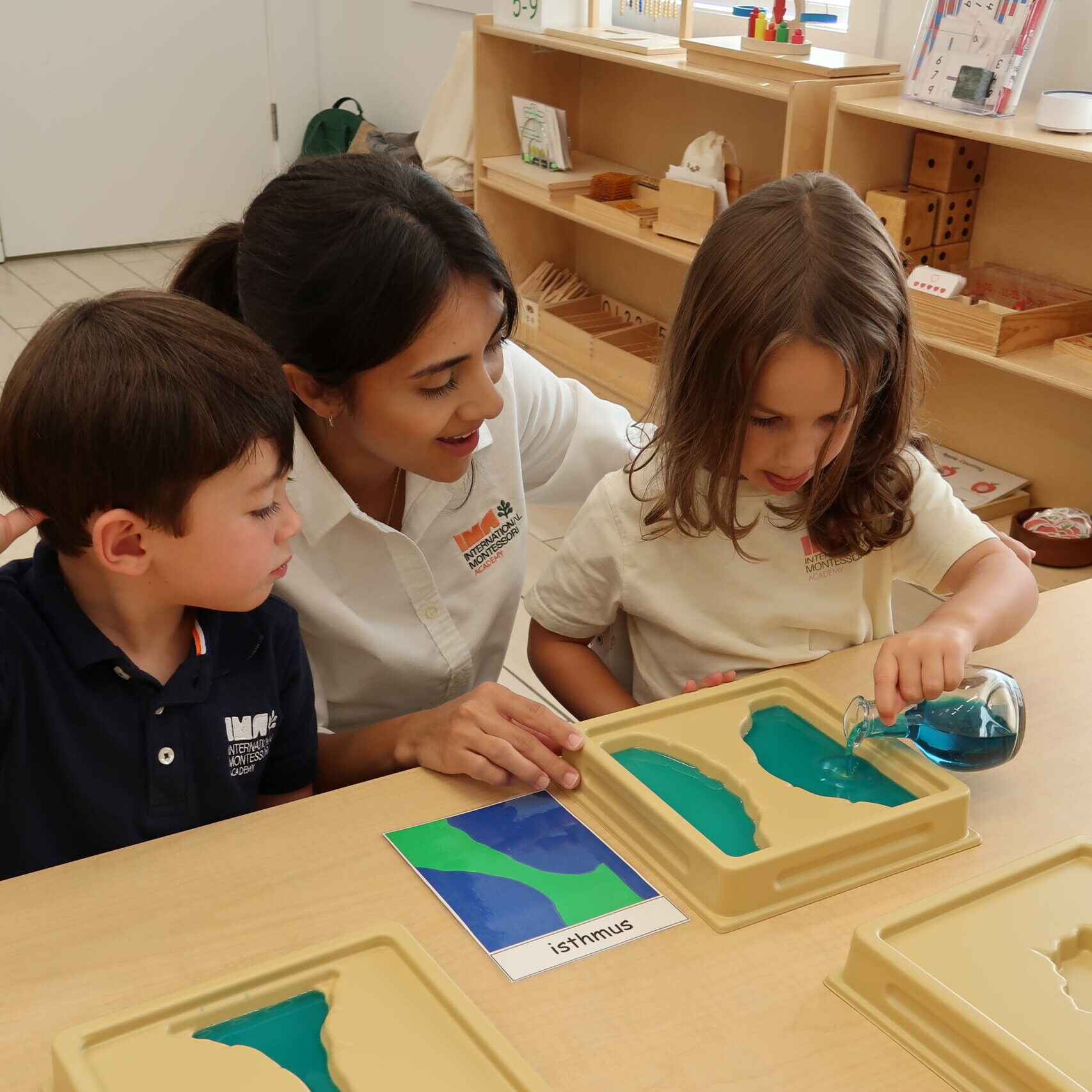
Set out a manageable pitcher, a stable cup, and a cloth. Demonstrate a slow pour, then invite the child to try with a small amount of water.
If water spills, help make cleanup part of the activity: “The cloth is here. We can wipe it together.” Keep the task manageable rather than treating a spill as a failed attempt.
3. Taking Part in Getting Dressed
Choose an achievable step. A child might push an arm through a sleeve while you hold the opening, or pull up a zipper after you connect it.
Before helping with the whole task, ask: “Would you like me to hold this part?” Practice when the family has time, rather than making a rushed departure the test of a new skill.
4. Caring for a Plant
Invite your child to help check a suitable plant with you and water it when needed. Offer a small container with an appropriate amount of water, and keep the plant within safe reach.
This can be a shared observation: “Let’s see how the soil feels.” An adult still checks what the plant needs; the child can participate in the routine.
5. Returning an Activity to Its Place
Give a puzzle, book, or drawing tray a recognizable home. Demonstrate where it belongs and invite your child to help put it back.
When the task feels too large, make the next step concrete: “Let’s put these pieces in the box.” Tidying can begin with a shared action rather than an instruction to organize an entire room.
How Much Help Should You Give?
Notice where the difficulty occurs. Does your child understand the sequence? Can they reach the item? Is the container too heavy? Sometimes changing the setup is more useful than repeating an instruction.
You can offer a choice of support: “Would you like me to show you again, or shall we do this part together?” If your child is upset or asks for comfort, respond to that need. A practice opportunity can wait.
Independence does not require withholding help. The purpose is to find a level of participation that is possible now, then adjust as your child becomes more familiar with the activity.
What Can You Try With a Toddler or an Older Preschooler?
For toddlers, self-care, movement, and participation in familiar routines are central parts of Montessori environments. An adult may do much of a task while the child contributes a simple action.
Older preschoolers may be ready to connect several familiar steps. Use your child’s current abilities, rather than age alone, to decide where to begin.
| Routine | A small starting step | A possible next step |
| Arriving home | Place shoes in a basket with help. | Put shoes away and hang up a bag. |
| Preparing the table | Carry one napkin. | Arrange a napkin, spoon, and plate. |
| Caring for belongings | Put one book on its shelf. | Return the materials from a familiar activity. |
These are possibilities, not milestones or a schedule. Children may need different tools, communication supports, or assistance to participate comfortably.
Start With One Small Change at Home
The American Montessori Society’s guidance on Montessori at home emphasizes observation, demonstration, practice, and adapting the environment. A reachable hook or a clear place for belongings can be a useful starting point.
Choose one routine your child already shows interest in. Prepare what is needed, demonstrate the part you want to share, and make room for practice. Afterward, consider what helped and what was awkward.
You might notice that a smaller container is easier to hold, or that the activity works better at a quieter time of day. Use that observation to make the next attempt more accessible.
Explore Everyday Learning at IMA in Miami
At International Montessori Academy, Practical Life is one of the core areas of our Montessori curriculum. Our approach to Montessori education connects independence with responsibility, respect, and thoughtful guidance.
IMA offers a toddler program for children from 12 months to three years and a preschool program for ages three to six. Explore our Montessori programs and bring your questions about how teachers introduce routines and support children as they practice.
Visit us at 12400 SW 84th Ave Road, Miami, FL 33156.
Schedule a tour of IMA to see the learning environment and talk with our team about your child’s next steps.