info@international-montessori.com 1-786-732-2661
Know Us Better

About Us

- Dr. Maria Montessori

"THE CHILD IS BOTH A HOPE AND PROMISE FOR MANKIND"

At International Montessori Academy (IMA) we are committed to create a community of children, parents, and teachers that care for the respect of others, our school, the environment, and the World. We focus on the 4 main aspects of the Montessori

We focus on the 4 main aspects of Montessori:

  • Concentration
  • Coordination
  • Independence
  • Order

Our Method

We teach our children critical thinking, social grace, and courtesy. Our goal is to provide our students with a Montessori based early-childhood learning experience that is nurturing, educationally rich, and developmentally appropriate. Maria Montessori was an Italian physician, educator, and innovator. She opened the first Montessori school “The Casa dei Bambini” (The children’s house) in Rome on January 6th, 1907. She was nominated three times for the Nobel Peace prize. Click Here to learn more about Montessori Education. 
The Directress

Montessori Core Areas

At IMA, our academic approach is thoughtfully grounded in the five core areas of Montessori education: Practical Life, Sensorial, Language, Mathematics, and Cultural Studies.
 
Each area plays an essential role in the child’s development and is carefully integrated into the classroom experience. Through purposeful materials, individualized guidance, and a thoughtfully prepared environment, children strengthen independence, concentration, critical thinking, communication, and confidence while developing a genuine love of learning.
 
These five areas work together to create a complete and meaningful educational foundation, allowing children to build knowledge through experience, progress with confidence, and develop the skills they will carry into future academic learning and everyday life.


Practical Life

Practical Life is where independence begins.
 
Through meaningful everyday activities such as pouring, transferring, food preparation, care of the environment, and self care, children develop coordination, concentration, order, confidence, and responsibility.
 
These experiences may appear simple, but each one requires focus, precision, sequencing, and control of movement. Over time, children become increasingly capable of completing tasks independently and taking an active role in caring for themselves and their surroundings.
 
Practical Life also prepares children for more advanced academic work by strengthening the attention, fine motor control, organization, and perseverance they will later use throughout the Montessori curriculum.


Sensorial

Children first understand the world through their senses.
 
The Montessori Sensorial area helps children refine what they see, hear, touch, and experience by working with carefully designed materials that isolate specific qualities such as size, shape, color, texture, weight, sound, and dimension.
 
Through these experiences, children learn to observe closely, compare, classify, recognize patterns, and develop greater attention to detail.
 
Sensorial work also provides an important foundation for later learning in mathematics, geometry, language, science, and art. Concepts that may eventually become abstract are first experienced concretely, allowing children to build understanding through direct exploration.


Language

Language development in Montessori begins with rich communication and grows naturally toward reading and writing.
 
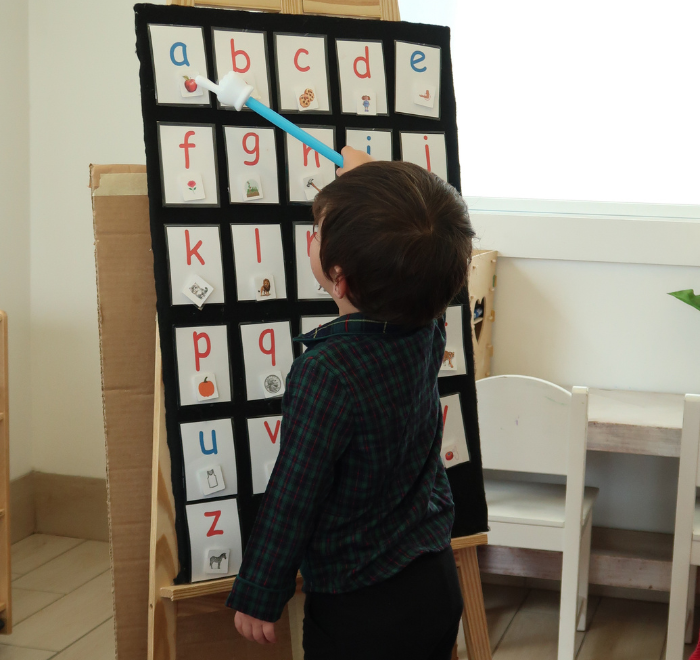
Through conversation, storytelling, vocabulary development, sound awareness, and carefully sequenced Montessori materials, children strengthen both expressive and receptive language while developing a deeper understanding of how language works.
 
Children gradually progress from identifying sounds and symbols to building words, reading, writing, and communicating their own ideas with greater confidence.
 
Because each step builds upon the one before it, literacy develops through understanding rather than memorization alone. The goal is not simply to teach children how to read and write, but to nurture confident communicators who enjoy language and are eager to express their thoughts and ideas.


Mathematics

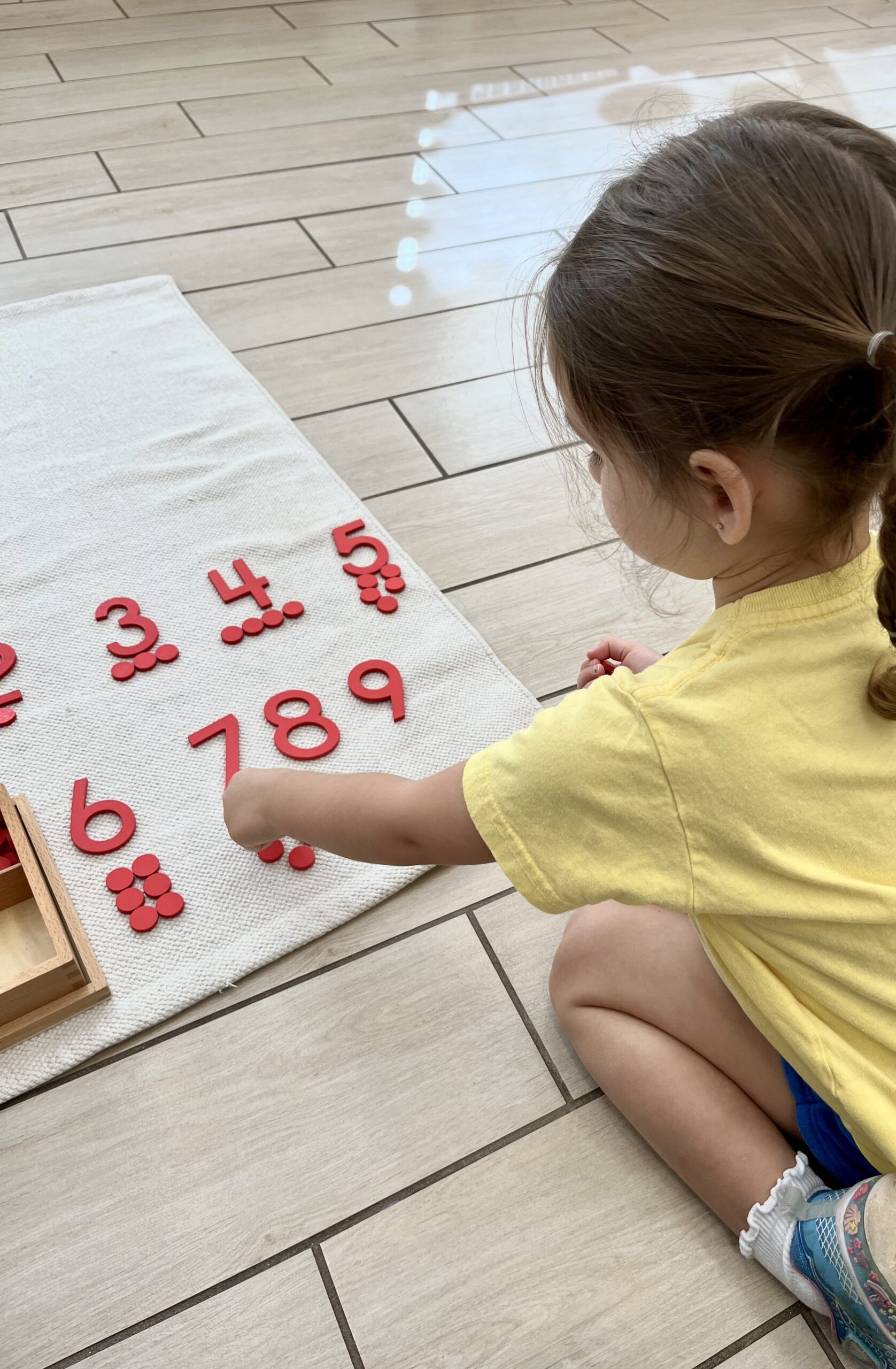
Montessori mathematics helps children understand numbers before asking them to work with them abstractly.
 
Through hands on materials, children experience quantity, sequence, place value, operations, and mathematical relationships in a concrete and meaningful way. They are able to see quantities, manipulate them, compare them, and understand how numbers relate to one another.
 
As understanding develops, children gradually move from concrete materials toward more abstract mathematical thinking.
 
This progression allows mathematics to become logical, visual, and approachable while building a strong foundation in number sense, reasoning, problem solving, and confidence.


Cultural Studies

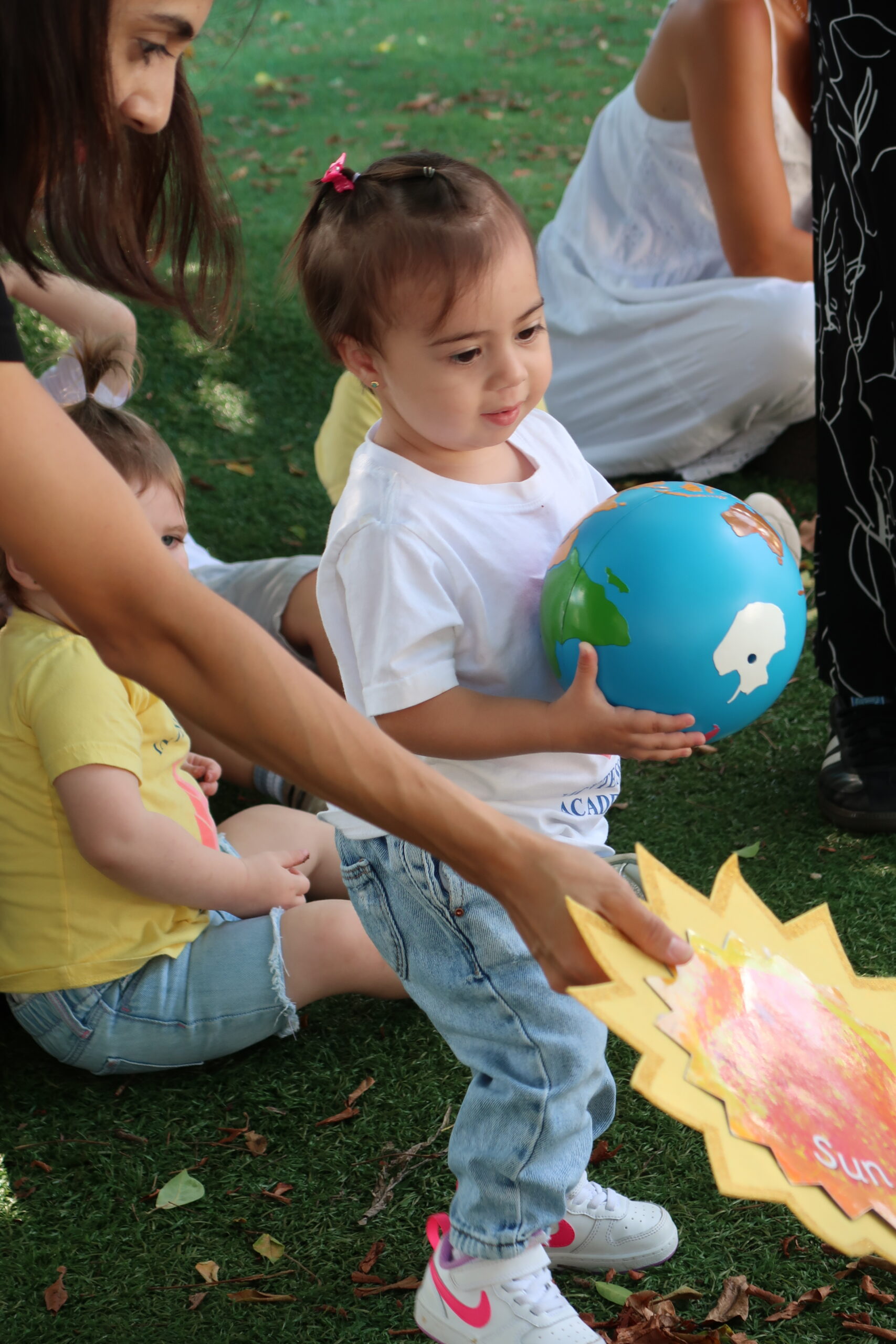
Cultural Studies introduces children to the wider world and encourages a natural sense of curiosity about people, places, nature, and the environment.
 
Through geography, science, history, art, music, nature studies, and exploration of cultures around the world, children begin to understand how the world is organized and how people, communities, and environments are connected.
 
Maps, real objects, experiments, stories, observation, and hands on experiences help transform broad concepts into learning that children can truly understand.
 
As their knowledge grows, children develop curiosity, respect for different cultures and perspectives, appreciation for the natural world, and a stronger sense of their own place within it.
 
Cultural Studies encourages children to ask questions, make connections, and approach the world with both knowledge and wonder.