
Montessori vs. Traditional Preschool: What Parents Should Know
The main differences between Montessori and traditional preschool involve how activities are organized, how children make choices, and how teachers introduce learning. Montessori follows a defined educational approach with specialized materials and time for individual exploration. “Traditional preschool” describes a much broader range of programs, so the most useful comparison is between the actual classrooms you are considering.
For your family, that means looking beyond a school’s label. How would your child spend the morning? Who would help when something feels difficult? How would you know what your child is learning?
What Does “Traditional Preschool” Mean?
There is no single traditional preschool model. A school might emphasize play, teacher-planned activities, projects, or a combination of approaches. It is worth asking each program to explain its philosophy in concrete terms.
Child choice and thoughtful adult guidance also exist outside Montessori. The National Association for the Education of Young Children describes guided play as an approach that combines children’s agency with adult support toward a learning goal.
Avoid assuming that every non-Montessori classroom relies on worksheets or that every Montessori classroom operates in exactly the same way.
Montessori vs. Traditional Preschool at a Glance
Use this table as a starting point for a school conversation. The conventional-program column lists possibilities to investigate, not rules that apply to every preschool.
| Area | Montessori approach | What to ask about in another preschool |
| Activity choices | Children select appropriate activities with teacher guidance. | When can children choose, and when does the group follow a shared activity? |
| Materials | Specialized Montessori materials follow a developmental sequence. | Which materials are used, and how do they connect with learning goals? |
| Daily rhythm | Extended work periods allow children to revisit activities. | How often do children change activities? Can they continue something that engages them? |
| Age groups | Early childhood classrooms commonly bring several ages together. | How are groups formed, and what opportunities exist to learn with different peers? |
| Teaching | Observation informs individual and small-group lessons. | How does the teacher adapt instruction for different levels of readiness? |
The American Montessori Society identifies these features in its core components of Montessori education. A school visit can help you understand how a particular program puts them into practice.
How Are Choice and Structure Balanced?
In Montessori, freedom comes with expectations for using materials and respecting the classroom community. A child can make a meaningful choice while still receiving a clear demonstration and support from an adult.
Other preschools may organize choices through activity centers, guided play, or projects. The presence of a planned group activity does not tell you, by itself, whether a program responds to individual children.
An illustrative question is: What happens when a child wants to continue an activity as the group moves on? Ask each school how it handles that situation. Its answer will tell you more about flexibility than a general claim that learning is “child-centered.”
What Does Academic Learning Look Like?
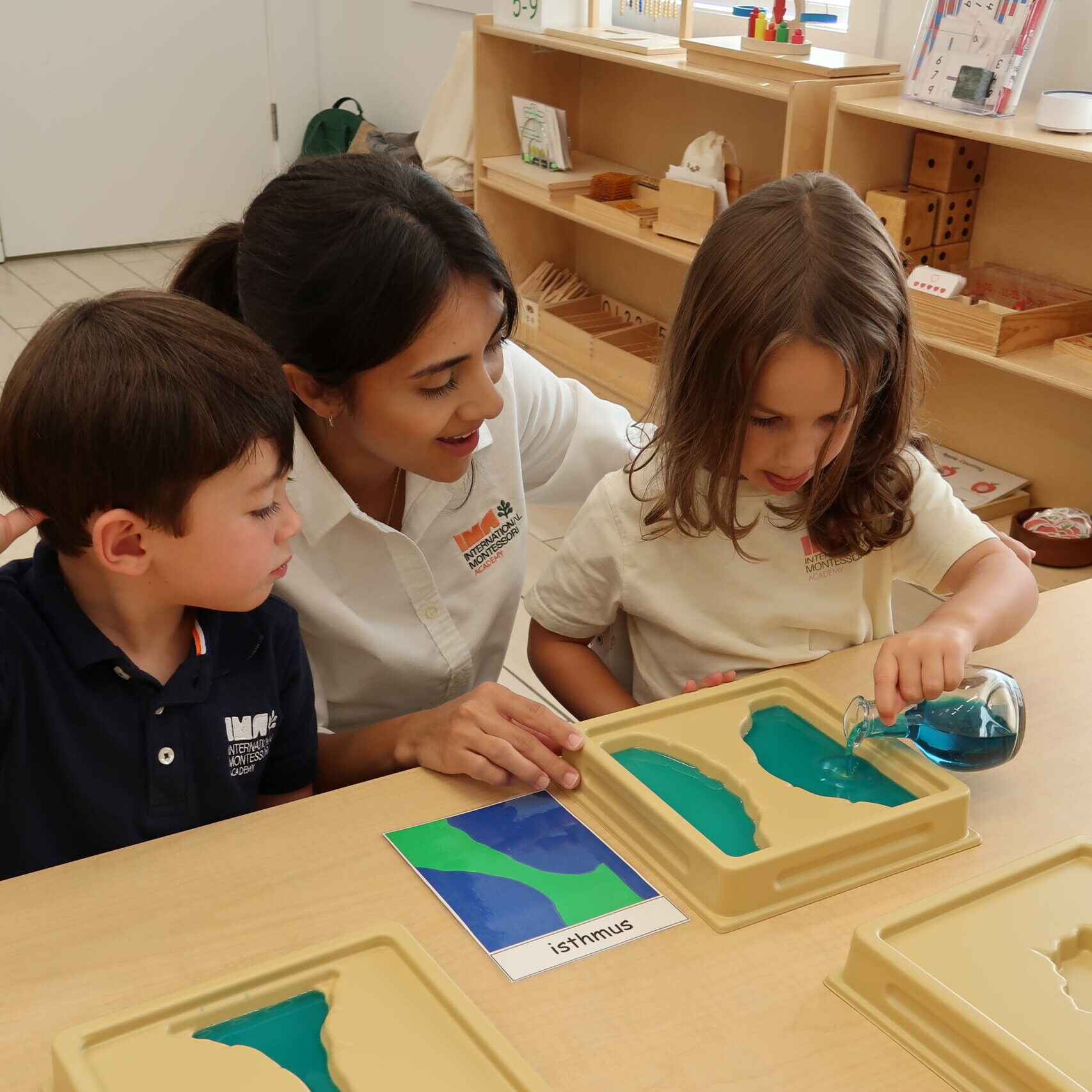
In a Montessori preschool, children encounter language and mathematics through sequences of concrete activities. Tactile letters connect movement with letter forms and sounds; number materials make quantities visible and tangible. Practical Life and Sensorial activities remain part of the curriculum alongside these academic experiences.
Other preschools may introduce related ideas through stories, games, construction, art, or guided group activities. Ask to see an example of how a concept is introduced and revisited.
For instance, you might ask: “If my child recognizes the written number five, how would you explore whether they understand a quantity of five?” This shifts the conversation from completed tasks to understanding.
The Montessori early childhood curriculum includes language, mathematics, Practical Life, Sensorial exploration, and Cultural Studies. The question for families is how a school makes its curriculum meaningful and accessible to their child.
How Do Children Learn With Other Children?
Montessori environments for ages three to six bring children at different stages of development into a shared community. A younger child may observe a familiar routine before trying it; a more experienced child may have opportunities to help. Children can also work on their own activities within that community.
When comparing schools, look beyond the age range. Ask how teachers help children join an activity, wait for a turn, express disagreement, and repair a difficult interaction.
You might say: “My child sometimes watches before joining in. How would you support that?” Give the teacher a real example from your child’s life and listen for a specific, respectful response.
Does My Child Need to Be Independent Before Starting Montessori?
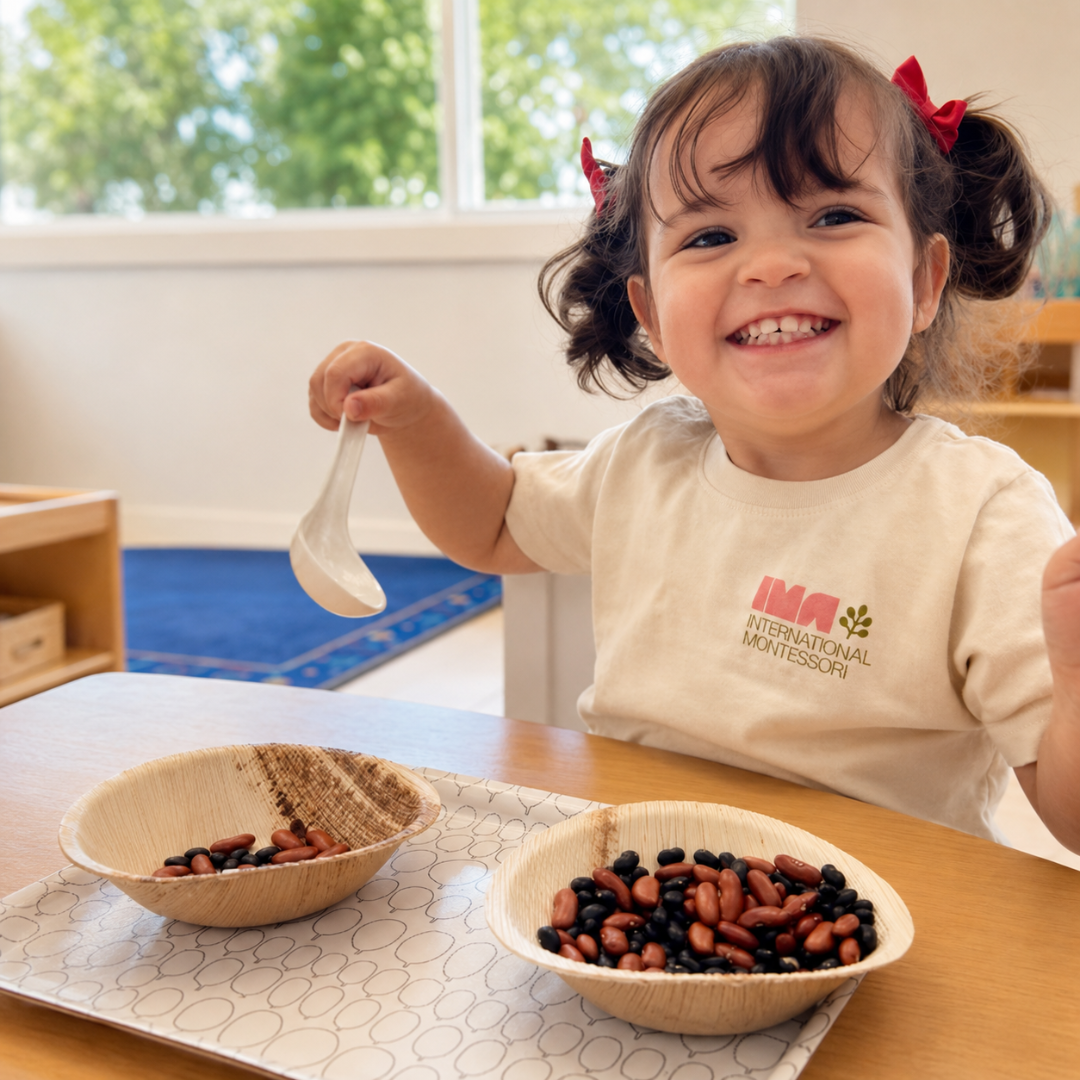
Independence is something Montessori environments are designed to support through practice. It is not a reason to expect a new child to manage every classroom routine alone.
For a two-year-old, ask about help with meals, toileting, rest, and separation. For an older preschooler, ask how teachers introduce unfamiliar materials and respond when an activity becomes frustrating.
These conversations matter in any setting. A label cannot tell you how a particular teacher will welcome your child or adapt support. Share the routines, interests, and challenges that would help the school get to know your family.
How Can You Decide Which Preschool Fits Your Family?
After each visit, write down a few observations while they are fresh:
- Adult interactions: What did you notice about how teachers listened and responded to children?
- Support: Could the team explain how it would help your child settle in?
- Learning: Did you see a clear connection between activities and their purpose?
- Communication: How will teachers share progress and discuss concerns with you?
- Daily logistics: Do the schedule, costs, and commute work for your household?
If possible, try the route at the time you would normally travel. A convenient visit in the middle of the day may not reflect your family’s morning routine.
You do not need to decide from a comparison chart alone. Bring the same questions to each school, consider the answers alongside your observations, and discuss anything that remains unclear.
Visit International Montessori Academy in Miami
At International Montessori Academy, families can explore a toddler program for children from 12 months to three years and a preschool program for ages three to six. Read about IMA’s Montessori programs and the values behind our approach as you prepare your questions.
Our school is located at 12400 SW 84th Ave Road, Miami, FL 33156.
Schedule a tour of IMA to see the learning environment, meet our team, and talk about what you are looking for in your child’s preschool experience.